Posted July 09, 2026

By Today's Tech FWD
SpaceX Launches "Supertorquer"
Ray Blanco:
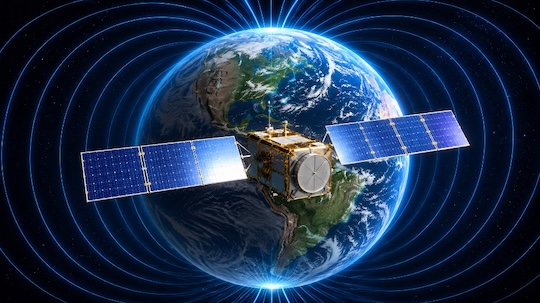
Scientists Test New Spacecraft Thruster That Uses No Fuel, Just Earth’s Magnetic Field, in Orbit
Satellites perform a delicate dance to maintain their orbit, by locking themselves to a speed just fast enough to counteract the downward pull of gravity.
To stop their orbit from decaying too much, satellites use small in-space thrusters, which broadly speaking, fall into two categories: chemical or electric. The former uses a combustible fuel source that gets accelerated through a nozzle, while the latter uses electrical energy to convert propellant into kinetic energy.
Now, New Zealand space startup Zenno Astronautics says it’s tested an entirely new type of thruster that, unlike either of those conventional technologies, uses superconducting magnets to maintain a satellite’s orbit and orientation. The magnets convert solar energy directly into momentum, effectively harnessing the Earth’s magnetic field itself.
The company’s “Supertorquer” system, attached to a Mira satellite developed by Impulse Space, was launched into space as part of a SpaceX rideshare mission in November. The Supertorquer successfully altered the Mira satellite’s orientation on command, just as designed.
The startup has some ambitious plans and is hoping to scale up the system to enable future spacecraft to perform docking maneuvers or even help propel them to the Moon or Mars by exclusively relying on solar power. How feasible those lofty plans will turn out to be remains to be seen, but the startup is optimistic.
 |
|---|
Davis Wilson:
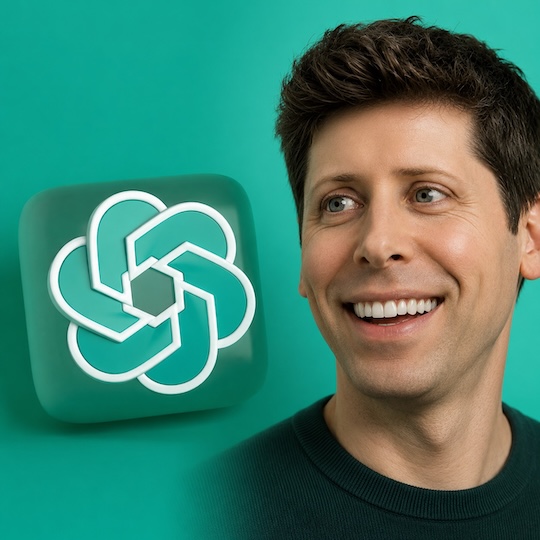
Sam Altman Says OpenAI’s New Model Is 54% More Efficient To Run
OpenAI began rolling out GPT-5.6 Sol to the general public on Thursday after the Trump administration approved a broad release, ending weeks of restricted access to a small group of government-vetted partners.
Speaking to CNBC, CEO Sam Altman said Sol achieves 54% greater token efficiency on agentic coding tasks, putting it at parity with or ahead of rival models. "Every enterprise now is thinking about spend and the value they're getting in exchange for AI, and this is what we really want to do," Altman said.
GPT-5.6 is a family of three models. Sol is the flagship tier, Terra is a lower-cost option aimed at enterprise workloads, and Luna is the fastest and least expensive of the three, designed for high-volume tasks.
The GPT-5.6 rollout had been limited to roughly 20 partners after the Trump administration asked OpenAI to stagger the release while federal agencies evaluated the model. The Commerce Department's Center for AI Standards and Innovation carried out the evaluation, and OpenAI sent technical staff to Washington to respond to the agency's questions. Sol's capabilities in coding, biology, and cybersecurity were among the factors that drew federal scrutiny.
 |
|---|
Chris Campbell:
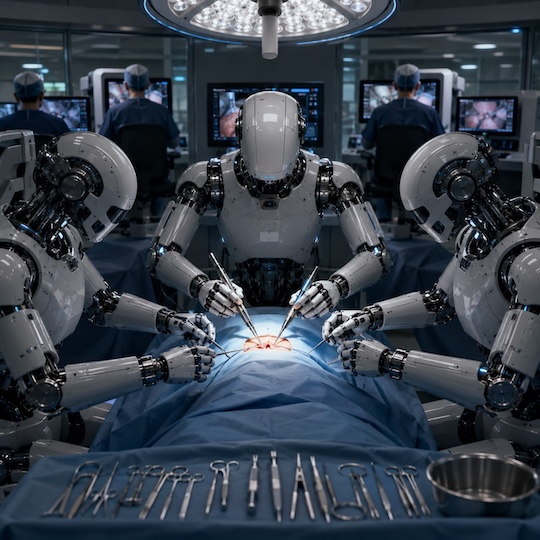
World’s First Surgery Using Teleoperated Humanoid Robots Conducted by U.S. Team
Researchers have achieved a world first by successfully using teleoperated humanoid robots to perform two surgeries during a preclinical trial.
The procedures included a gallbladder removal completed by a human-robot team, with a surgeon assisting a humanoid robot, and a second operation carried out by two humanoid robots working together.
Both surgeries were performed on large nonprimate mammals by a team at the University of California San Diego (UCSD).
According to researchers, the milestone demonstrates the potential for teleoperated humanoid robots to support surgeons in operating rooms, with future applications ranging from surgical assistance to remotely performed procedures.
Teleoperated and autonomous humanoid robots could help address the global shortage of surgeons by expanding access to advanced surgical care, particularly in underserved regions where specialist medical services are limited.
Their human-like form and versatility allow them to perform a broader range of clinical and support tasks than conventional robotic surgery platforms, making them suitable for hospitals, remote communities, disaster zones, and search-and-rescue operations.
Sign Up Today for Free!
Today’s Tech FWD compiles all the best trading tips and market insights straight from our panel of distinguished analysts, including James Altucher, Ray Blanco, Chris Campbell, Greg Guenthner, Zach Scheidt and more.
Inside each issue, you'll find perspectives from our experts about speculative ways to trade, tech trends, crypto news and the latest AI opportunities so YOU can profit while the rest of the market is left behind.

AI's Judgment Day
Posted July 08, 2026
By Today's Tech FWD

SURPRISE: You Own SpaceX
Posted July 07, 2026
By Today's Tech FWD
Drones That Never Die
Posted July 06, 2026
By Today's Tech FWD

Play Ball! 3 Investing Rules From the Baseball Diamond-2
Posted July 03, 2026
By Enrique Abeyta
SpaceX's iPhone Killer
Posted July 02, 2026
By Today's Tech FWD
